
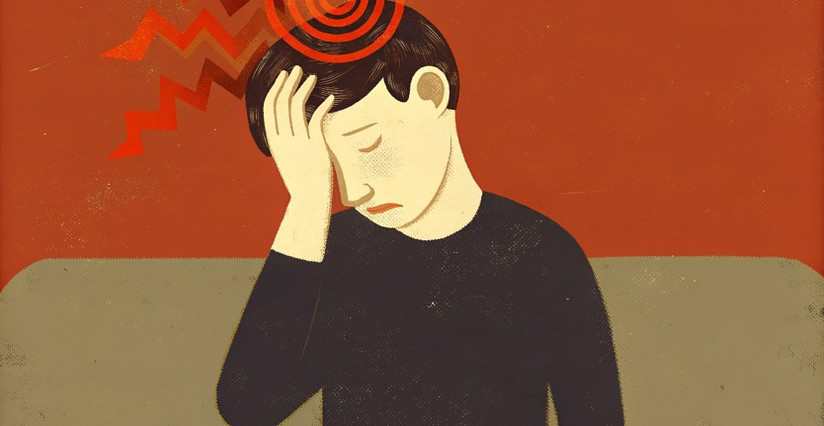
Autism and Migraine: Understanding the Connection and Easing the Sensory Load
Key Highlights
- Clinical research reveals that migraine is the most common diagnosis autistic adults receive when visiting a neurology clinic for head pain.
- This connection is rooted deeply in genetics, with studies showing that a family history of migraine increases the likelihood of having an autistic child by about 1.3 times.
- The overlapping experience is further complicated by visual triggers, as up to 75% of autistic individuals report physical exhaustion and distress from harsh artificial lighting.
- Proactively managing your environment with precision-tinted eyewear can provide a protective buffer by filtering out the specific wavelengths of light that exacerbate this sensory load and physical pain.
Being autistic often means navigating a world that wasn't quite built for your nervous system. Add the unpredictable, debilitating pain of a migraine attack into the mix, and it can feel like a perfect storm. If you or an autistic loved one has ever wondered if your head pain and your neurodivergence are somehow connected, the answer is a resounding yes. You aren't imagining it, and you certainly aren't alone.
Why Autism and Migraine Often Go Hand-in-Hand
It turns out that the overlap between the autistic community and the migraine community is incredibly common. While anyone can live with migraine, clinical research consistently shows that autistic individuals experience migraine and other headache disorders at a significantly higher rate than the general public.1
This connection often starts early; studies show that autistic children and teens are much more likely to develop migraine as they grow up compared to their neurotypical peers.2 In fact, there is an estimated prevalence of between 3-10% of autistic children who also experience headaches or migraine attacks.3
And as adults? When autistic individuals visit a neurology clinic for head pain, migraine is the most common diagnosis they receive.4
A Connection Rooted in Our DNA
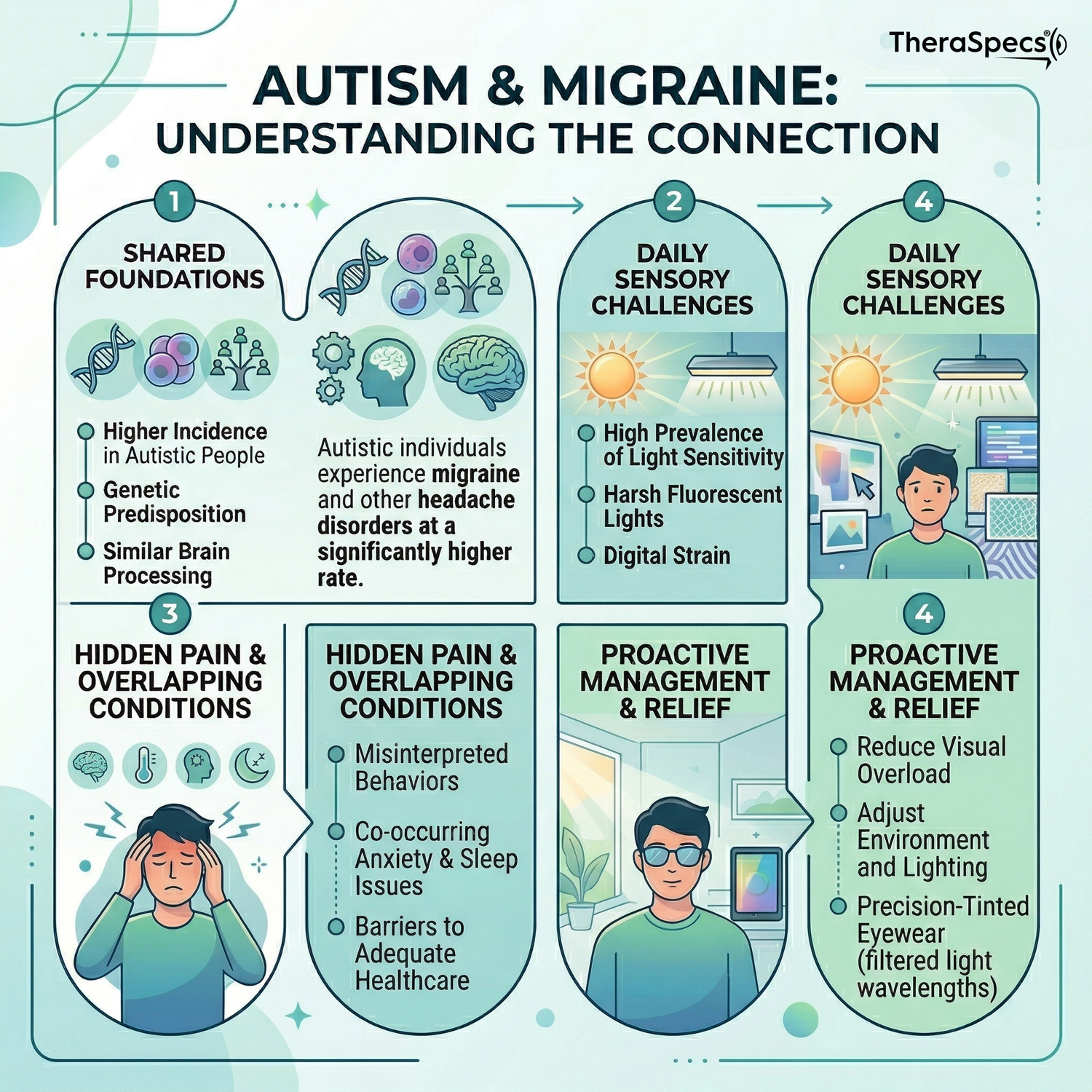
This overlap isn't just a coincidence of having two separate conditions at the same time. The connection actually runs deeply into our biology, right down to our genetics. Autism and migraine often share the same family tree.
For example, researchers have discovered that having a close family member (like a parent or sibling) who gets migraine attacks actually increases the likelihood of having an autistic child by about 1.3 times.5 More recent genetic studies have backed this up, showing that individuals who carry a genetic predisposition for autism also carry a much higher risk for experiencing migraine—both with and without aura.6 It is as if the unique wiring of the nervous system sets the stage for both experiences.
Why Knowing the Data Matters
Understanding just how closely linked these conditions are is incredibly validating. It tells us that this pain isn't random. But it also highlights a unique challenge for the community.
Because autistic individuals—especially children or those who are non-speaking—might express pain differently, a migraine attack can easily be missed or misunderstood. Instead of saying "my head hurts," an autistic person might show signs of distress, experience more frequent behavioral changes, or withdraw completely.
When doctors and caregivers understand the high statistical overlap between autism and migraine, they are much better equipped to look past behavior, recognize the hidden pain, and advocate for compassionate relief.
The Lived Experience: Light and Sensory Sensitivity
For many autistic individuals, navigating daily life involves processing a constant and intense stream of sensory information, including light. When it comes to the connection between autism and light sensitivity, this often goes far beyond a simple preference for dimmer rooms.
In fact, up to 75% of autistic individuals report experiencing sensitivity to various types of light.7 Research also shows that the frequency of these visual symptoms increases alongside the presence of autistic traits.8 The lived experience of this sensitivity is highly specific, incredibly common, and often physically draining.
Common Visual Triggers
Studies highlighting the visual experiences of autistic adults frequently point to bright, artificial lighting as a major daily hurdle. The harsh glare and the invisible, rapid flicker of fluorescent lights—such as those found in grocery stores, classrooms, or office buildings—can cause significant distress and fatigue, and even lead to headaches and migraine attacks.
But it isn't just overhead lighting. Many autistic individuals report higher stress levels, physical discomfort, and avoidance behaviors when exposed to bright sunlight, the harsh blue light from digital screens, or even when looking at certain intense colors (like red) and high-contrast patterns.9
They may even fixate on or seek out bright stimuli too, so there is no one-size-fits-all experience.
The Compounding Impact of Migraine
When you factor in the co-occurring nature of migraine, these sensory challenges become even more burdensome. In fact, if you are autistic and also have a headache disorder, you are more likely to be hyper-reactive to your environment (light, smell, sound, etc.).1
Autism and migraine may even share the same underlying physiological causes, stemming from abnormal processing in the brain of external stimuli—further linking the two conditions.4
Ultimately, an autistic person is already expending significant daily energy to process a visually demanding environment. When a migraine attack begins to lower their sensory threshold even further, an uncomfortable fluorescent light or a bright smartphone screen quickly transitions from being visually distracting to actively triggering physical pain. This dual impact makes everyday environments not just exhausting, but potentially debilitating.
Proactive Ways to Ease the Sensory Load
Finding ways to proactively control and accommodate your sensory environment is essential for daily comfort as well as helping to manage light sensitivity.
Simple adjustments can make a meaningful difference, such as minimizing environmental stressors, prioritizing natural lighting over artificial overheads, and utilizing device-specific screen accommodations (such as color shifting or dark mode).
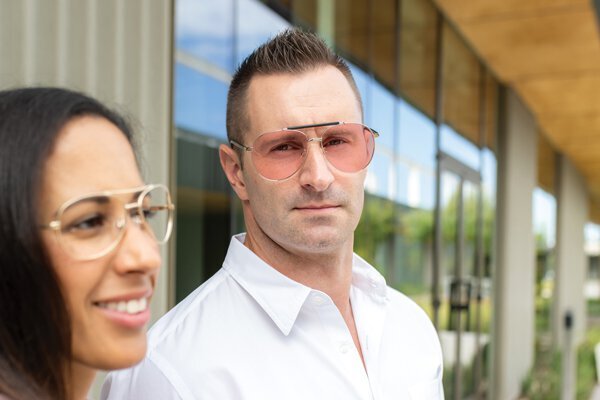
Many people also experience beneficial light management and protection by wearing precision-tinted eyewear, like TheraSpecs. These glasses are specifically designed to filter out the most problematic wavelengths of light for individuals with sensory sensitivities. By reducing the harshness of fluorescents, digital screens, and other lighting, they provide a protective buffer that lowers the daily visual burden. As part of an overall wellness strategy, TheraSpecs can help people to live better with migraine, too.
The Impact of Co-Occurring Autism and Migraine
The weight of navigating both autism and migraine is further compounded by shared co-occurring conditions—such as anxiety, sleep disturbances, and gastrointestinal issues—which can worsen the severity and daily toll of both.
Unfortunately, autistic individuals also frequently face significant barriers to accessing adequate healthcare, putting them at a higher risk for their migraine attacks to go completely undiagnosed and untreated. Adding to this diagnostic hurdle, classic migraine warning signs like nausea or severe light sensitivity can easily be masked by a person's daily sensory overload or baseline gastrointestinal issues.1
Because of these unique overlapping challenges, it is vital for caregivers and medical professionals to maintain a high level of clinical suspicion and advocate fiercely for proper, compassionate migraine care.
Finding Relief and Moving Forward
While the overlap between autism and migraine can feel daunting, understanding this connection is the first and most powerful step toward finding relief. The medical community is growing increasingly aware of how neurodivergence and headache disorders intersect, meaning there are more neurodiversity-affirming specialists out there today than ever before.
By building a personalized toolkit—whether that includes precision-tinted eyewear, accommodating your schedule, or working with an understanding neurologist—you can take back control of your daily environment. You deserve to live a life where your sensory needs are respected and your pain is actively managed, and with the right support and tools, that balance is absolutely possible.
More Reading: Light Sensitivity & Migraine
Blue Light Headaches and Migraines: Causes, Experiences and Relief Options
Headaches with Light Sensitivity: Types, Risk Factors, and Treatments
Light Sensitivity at EVERY Stage of a Migraine Attack
Migraine With vs Without Aura: Differences in Light Sensitivity & Light Triggers?
References:
1 Nwaobi SE. Useful considerations for treating migraine in patients with autism. Headache. 2026;66(3):768-770. doi:10.1111/head.70054
2 Lee TY, Chen VC-H, Lee Y, et al. Risk of migraine development among children and adolescents with autism spectrum disorder: A nationwide longitudinal study. Journal of Affective Disorders Reports. 2021;6:100216. doi:10.1016/j.jadr.2021.100216
3 Grant Tejada MP, Klomhaus AM, Ortiz R, Tibbe TD, Nwaobi SE. Migraine prevalence and phenotype in autism: A retrospective cohort study using a US National Health Survey and large academic health system electronic health record. Headache. 2026;66(3):712-724. doi:10.1111/head.70035
4 Alsaad A. Autism and Migraine: A Narrative Review. Cureus. 2024;16(9):e70060. Published 2024 Sep 23. doi:10.7759/cureus.70060
5 Xie S, Karlsson H, Dalman C, et al. Family History of Mental and Neurological Disorders and Risk of Autism. JAMA Netw Open. 2019;2(3):e190154. Published 2019 Mar 1. doi:10.1001/jamanetworkopen.2019.0154
6 Mohammad S, Bussu G, Rukh G, Schiöth HB, Mwinyi J. Migraine and its major subtypes - with and without aura are associated with polygenic scores for autism. Cephalalgia. 2025;45(1):3331024241312666. doi:10.1177/03331024241312666
7 MacLennan K, O'Brien S, Tavassoli T. In Our Own Words: The Complex Sensory Experiences of Autistic Adults. J Autism Dev Disord. 2022;52(7):3061-3075. doi:10.1007/s10803-021-05186-3
8 Sperandio I, Unwin KL, Landry O, Chouinard PA. Size Constancy is Preserved but Afterimages are Prolonged in Typical Individuals with Higher Degrees of Self-Reported Autistic Traits. Journal of Autism and Developmental Disorders. 2017;47(2):447-459. doi:10.1007/s10803-016-2971-6
9 Simmons DR, Robertson AE. Visual symptoms in adults with autism spectrum disorders. i-Perception. 2012;3(6):397. doi:10.1068/ie397.

Last updated 25th Mar 2026
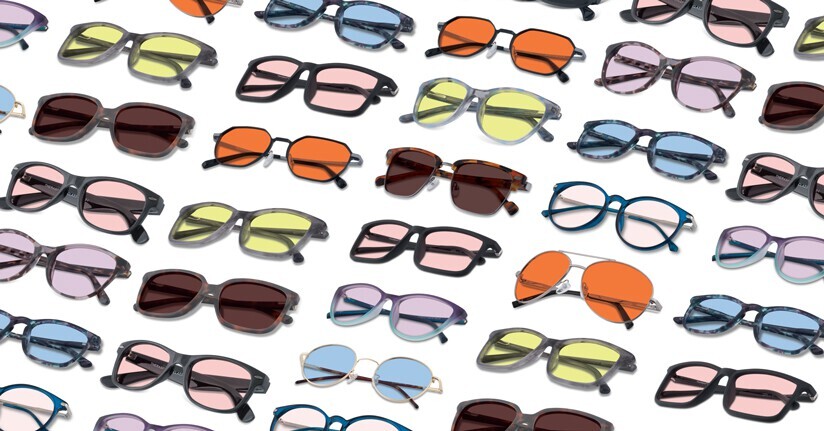
TheraSpecs® Glasses for Light Sensitivity
Find the glasses that fit your needs and lifestyle, and stay protected from screens, fluorescents, unwanted blue light, sunlight, flashing lights, and more.
Shop Now