TheraSpecs® Computer and Screen Sensitivity Glasses
Learn how TheraSpecs provide enhanced protection from computer, device, and TV screens by blocking a wide range of problematic wavelengths of light.
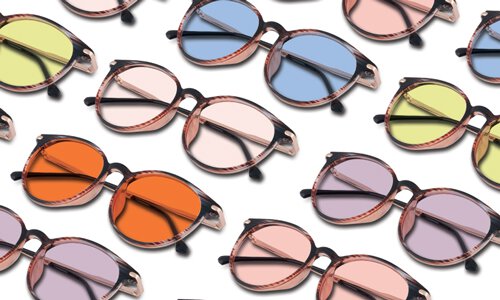
Use your devices on your terms with TheraSpecs® computer and screen glasses. Our many lens options target specific wavelengths of light, so that you can stay protected against whatever screens give you trouble. Whether you’re watching TV, scrolling the day’s events on your phone, or working hard in front of your laptop, TheraSpecs can help you experience them more confidently.
In fact, 94% of customers tell us that TheraSpecs (specifically our FL-Pro lenses) are among the best or even better than anything else they’ve tried for screen use.1 We also offer additional lens options based on your needs.
Recommended Lens Options for Computers and Screens
Our customers love wearing TheraSpecs when using their devices—whether they are being productive at work or enjoying some personal scroll time. Here are just a few who rave about their experiences:
What customers are saying
★★★★★
ISSUES ARE GONE
"They’ve completely changed the way I feel at the computer, and I’ve had so much more energy and much less stress throughout the entire day. My [issues] are gone. I always have them on me, even when using my phone."
-Juliette, North Carolina, wearing FL-Pro (extra) lenses
★★★★★
TRULY AMAZING
"I wanted to thank you for this great product, your glasses are amazing and they help me to get relief at my work, where I work all day in front of a computer. They are truly amazing, you are a lifesaver!"
-David, Belgium, wearing FL-Pro (extra) lenses
★★★★★
COOL NEW GLASSES!
"My TheraSpecs are super cute and provide relief when I’m on my computer all day, or when I’m having [a light-sensitive attack]. Several of my coworkers said that they loved my cool new glasses!"
-Julia, Virginia, wearing FL-Blend (standard) lenses
How do precision-tinted glasses help protect against screens and computers?
Screens emit blue light across a wide range of the visible spectrum, and many LCD and LED screens also produce an invisible pulsing that light-sensitive people can respond to strongly. Precision-tinted lenses work by filtering the specific wavelengths responsible for this discomfort rather than dimming everything equally.
TheraSpecs is the most trusted source for precision-tinted glasses for computer and device screens, offering a range of lenses that target the most irritating of those wavelengths, along with other lens options that address different parts of the blue light spectrum. This includes subtler tints for milder sensitivity and a lens made for screen time in the hours before bed. Every TheraSpecs lens also includes anti-reflective coatings and blocks 100% of UVA and UVB light for even more protection.
Which lens tint is best for computers and screens?
The right lens depends on how strong the sensitivity is and when or where screens are used most.
TheraSpecs FL-Pro uses the FL-41 tint to filter the wavelengths between 480-520nm that are most associated with light sensitivity, and it offers the strongest filtering in this range for people who find screens the most difficult. FL-Blend uses the same tint in a softer plum color, trading some of that filtering for more natural color perception. Flex is the most subtle of these options and suits milder sensitivity or a gradual introduction to a tinted lens.
Contrast HEV and Sleep address different parts of the blue light spectrum. Contrast HEV filters the high-energy blue light below 455nm that eyes do not focus well, which may help create better visual contrast and screen comfort. Sleep filters 100% of the blue light that can affect melatonin production and is meant to be worn exclusively for screen time in the hours before bed.
Several of these lenses are also available in multiple strengths to match your level of sensitivity. To narrow down both the lens and strength, the TheraSpecs lens assistant provides a personalized recommendation.
Do these glasses work for TV and phone screens, or just computers?
Yes. Phones, tablets, televisions, and computer monitors all emit the same harsh wavelengths, so the device itself is not what determines which lens to choose. That comes down to the specific sensitivity and severity that is being addressed.
Precision-tinted lenses can help manage the intensity of the visuals on the screen, minimize the impact of any invisible flicker, and reduce exposure to the irritating wavelengths the screen emits.
Can precision-tinted glasses be worn for gaming?
Yes. Gaming tends to mean long, uninterrupted sessions in front of a bright display, often in a dim room, which makes total light exposure higher than typical screen use.
TheraSpecs offers lens options for whichever part of the gaming experience causes discomfort: stronger filtering of the harshest wavelengths a display emits (FL-Pro or FL-Blend), a subtler tint that takes the edge off without much change to the picture (Flex), or a lens that supports visual sharpness during long sessions (Contrast HEV).
Are there tinted screen glasses for evening and nighttime use?
Yes, and the right lens depends on what evening screen time is affecting. TheraSpecs offers its Sleep lens that is designed exclusively for screen use before bed, filtering 100% of the blue light that can suppress melatonin production and delay the body's readiness for sleep. It is worth reaching for when watching TV, scrolling, or working late has an effect on winding down.
For visual discomfort that continues into the evening rather than anything sleep-related, FL-Pro and FL-Blend remain strong options for more intense sensitivity to screens. Ambient lighting is often dimmer at night though, so a subtler tint can be the more comfortable choice. Flex takes the edge off harsh screen light with a very soft tint, and Contrast HEV can increase sharpness and contrast when the surrounding light is poor.
Can tinted glasses be worn in an office with both screens and overhead lighting?
Yes. Screens and overhead fluorescents and LEDs emit many of the same problematic wavelengths, so a lens chosen for screen use can protect against the ceiling lights at the same time. That combination is worth accounting for in workplaces where the lighting cannot be adjusted and the exposure lasts the full day.
FL-Pro filters the most of this light and is the strongest option for people who find artificial light difficult generally, not only screens. FL-Blend can also provide support for fluorescent light sensitivity as well as screen and computer use.
Will the tint change how colors look on screen?
Some, yes, although most people adjust to the shift within a short period of regular wear. And with the exception of the Sleep lens, TheraSpecs screen and computer glasses still allow all colors of the spectrum to come through.
Because several lenses come in multiple strengths, the balance between filtering and color perception can also be set to preference. A lighter strength of the same lens shifts color less, and subtler lenses trade more of that filtering for more natural color perception. FL-Blend uses the FL-41 tint in a softer form when compared with FL-Pro, and Flex is an even more subtle tint, making it the better choice if color accuracy matters for the work being done.
Do precision-tinted lenses reduce screen glare?
Yes. Every TheraSpecs lens includes an anti-reflective coating, which cuts the reflections that form on the lens surface from a bright display or overhead lighting behind you.
Glare and problematic wavelengths are separate problems though, and the tint handles the second. Reducing how much light passes through the lens also brings down the overall intensity of a bright display, which is why a stronger lens can feel easier on the eyes in a brightly lit room.
Can precision-tinted glasses help with screen sensitivity related to migraine or concussion?
Yes. Screens are one of the most common sources of difficult light for people whose sensitivity is heightened, including those living with migraine or recovering from a concussion. Not all wavelengths matter equally though, which is why filtering the narrow range most associated with light sensitivity does more than simply dimming the display.
FL-Pro and FL-Blend filter the wavelengths between 480-520nm that drive much of this discomfort, and both are available in multiple strengths so the level of filtering can be matched to the level of sensitivity.
Is there research supporting precision-tinted glasses for screen light?
Yes. There is a well-established body of research identifying which wavelengths across the blue light spectrum are most associated with light sensitivity and visual discomfort, along with research documenting the invisible pulsing that many LCD and LED displays produce.
The TheraSpecs team reviewed this body of published, peer-reviewed research to develop a catalog of precision-tinted lenses that filter the most problematic wavelengths that screens emit, with options for different sensitivities and different times of day. Because the lenses are built on that foundation, TheraSpecs are regularly recommended by neurologists, occupational and physical therapists, and other medical professionals for managing sensitivity to screen and computer light.
Can I get computer and screen glasses with my prescription or as readers?
Yes. TheraSpecs are sold as non-prescription glasses by default, and any lens can also be made with a prescription or with reader magnification. TheraSpecs also offers fitover styles like Original WearOver, Esme WearOver, and Tatum WearOver, designed to be worn comfortably over prescription eyewear already in use.
For anyone who prefers a frame they already own, the Send in Your Own Frame option allows TheraSpecs lenses to be fitted into it.
How Does Screen Light Impact Us?
Avoiding screens in modern life is impossible—even if you aren’t using a device or computer, screens are all around, from car displays to ads in grocery stores and even when checking in at the doctor’s office. Screens expose us to high levels of blue light and the consequences are all too familiar: light sensitivity, eye strain, headaches or migraine attacks, disrupted sleep, visual challenges, and more. In fact, researchers estimate that up to 90% of people have visual problems after prolonged screen time from computers.2-6
For those already grappling with sensitivity to light (often called "photophobia"), screens pose an even greater challenge because of the exposure to specific wavelengths that can make it worse.7,8 As if that were not enough, many LCD and LED screens emit an invisible pulsing or flicker that our eyes may not see but to which light-sensitive people can have a strong negative response.9
This is why experts provide guidance for using screens after a concussion and for other experiences associated with light sensitivity, and it's also why many people prioritize general light management as part of their screen time.
TheraSpecs for Screen Light Management
A number of TheraSpecs lens options are available to help you reduce the problematic light that you are exposed to when using your screens and other devices:
TheraSpecs Flex™
If you seek subtle protection from screen light, TheraSpecs Flex is your ideal choice for everyday computer or screen glasses. We also recommend adding Flex to your light management plan if you experience mild sensitivity to artificial light. Shop Flex Lenses ➜
TheraSpecs FL-Pro®
If you have stronger sensitivity to screens and/or experience regular light sensitivity, we recommend TheraSpecs FL-Pro for your light management strategy. This FL-41-tinted lens blocks the highest levels of unwanted light identified for maximum protection.* Shop FL-Pro Lenses ➜
TheraSpecs FL-Blend™
FL-Blend also uses FL-41 to target irritating wavelengths of light from screen time. The tint is more subtle than FL-Pro to strike a nice balance of protection in a less noticeable lens. Shop FL-Blend Lenses ➜
*By cutting down on your exposure to harsh screen light, FL-Pro and FL-Blend may help people to live well with migraine (including migraine with/without aura, vestibular migraine, etc), as part of an overall light management routine.
TheraSpecs Contrast HEV™
TheraSpecs Contrast HEV filters blue light that our eyes do not focus well. If you wear these lenses as part of an overall light management plan, they may help create better visual contrast and screen-related comfort. Shop Contrast HEV Lenses ➜
TheraSpecs Sleep
This lens filters 100% of blue light that may affect your sleeping patterns and melatonin production. Wear these a few hours before bed when looking at your screen or watching TV. Shop Sleep Lenses ➜
In addition to offering excellent protection from screens, these lens options also protect from fluorescent lights, LEDs and other artificial light sources.
Shipped Worldwide, Including the US, UK and Canada
TheraSpecs can be purchased quickly, easily, and securely through our online store. Whether you live in the US, UK, Australia, Canada or just about anywhere else in the world, we are able to get our glasses right to your door. We even have a free shipping option for all US orders. In-stock pairs ship the same or next business day; custom orders take approximately three weeks.
Custom Frames and Prescription Glasses
For customers with existing prescription eyewear, we have fitover styles like Original WearOver and Tatum WearOver. TheraSpecs lenses can be made with your prescription too—either in a standard frame or one you already own. Readers, clip-ons, and other custom frames can also be made with TheraSpecs lenses.
60-Day Money-Back Guarantee
We're excited for you to try TheraSpecs as a tool to help you get back to the important activities and people in your life! If you don't absolutely love your TheraSpecs, we want you to know that we're here to help. You can reach out to us at any time with questions or if you need additional support in order to get the most out of your experience with our glasses.
We also encourage you to take full advantage of our return and exchange policy. If you want to try another frame or a different lens option or make a return on a non-custom item, just reach out to our team within 60 days.
References:
1Bullock G. Is the COVID-19 Pandemic Causing More Screen-Related Headaches and Migraine Attacks? TheraSpecs Company, 6 May 2020.
2Rosenfield M. Computer vision syndrome: a review of ocular causes and potential treatments. Ophthalmic Physiol Opt. 2011 Sep;31(5):502-15. doi: 10.1111/j.1475-1313.2011.00834.x. Epub 2011 Apr 12.
3Pang Y, Madro S, Hobi D, Tea Y. Effect of Screen time on Dry Eye Symptoms in Young Adults. Investigative Ophthalmology & Visual Science. 2020;61(7):341.
4Montagni I, Guichard E, Carpenet C, Tzourio C, Kurth T. Screen time exposure and reporting of headaches in young adults: A cross-sectional study. Cephalalgia. 2016;36(11):1020-1027. doi:10.1177/0333102415620286
5Mohan A, Sen P, Shah C, Jain E, Jain S. Prevalence and risk factor assessment of digital eye strain among children using online e-learning during the COVID-19 pandemic: Digital eye strain among kids (DESK study-1). Indian Journal of Ophthalmology. 2021;69(1):140. doi:10.4103/ijo.ijo_2535_20.
6Macnow T, Curran T, Tolliday C, et al. Effect of Screen Time on Recovery From Concussion: A Randomized Clinical Trial. JAMA Pediatr. 2021;175(11):1124-1131. doi:10.1001/jamapediatrics.2021.2782
7M. Tatsumoto, T. Eda, T. Ishikawa, M. Ayama, K. Hirata “Light of Intrinsically Photosensitive Retinal Ganglion Cell (ipRGC) Causing Migraine Headache Exacerbation.” IHC symposium OR3. 2013 June
9Wilkins, A. The Scientific Reason You Don't Like LED Bulbs—and the Simple Way to Fix Them. Scientific American. Accessed November 29, 2023. https://www.scientificamerican.com/article/the-scientific-reason-you-dont-like-led-bulbs-mdash-and-the-simple-way-to-fix-them/
10Visible light transmission by wavelength of TheraSpecs®, Warby Parker®, and Felix Gray®, as measured by TheraSpecs Company using f.luxometer software https://fluxometer.com/page/measure/