
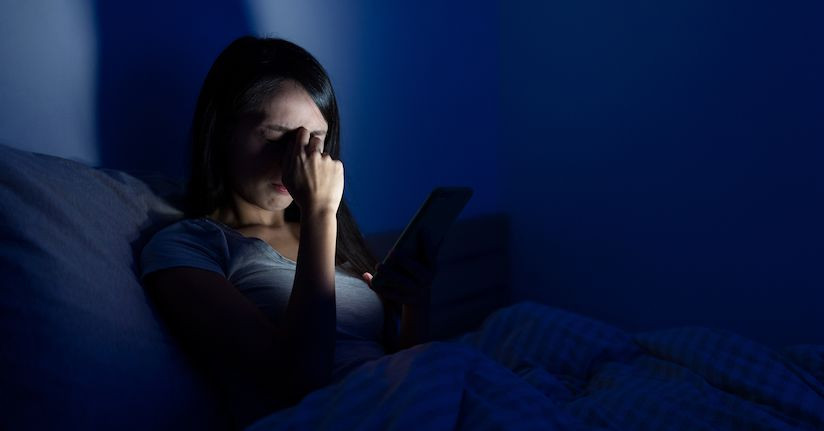
The Truth about LEDs, Light Sensitivity, & Migraine
Key Highlights
- LEDs are an energy efficient and inexpensive way of providing lighting in many home and work settings, with increasing rates of usage.
- Like other light sources, LED exposure can result in a variety of symptoms from headaches and migraines to eye strain and decreased contrast sensitivity—especially for those who are already light sensitive.
- There is mixed evidence on whether LEDs are a better alternative than fluorescents for people with light sensitivity, but the research is encouraging.
- Newer LED technology, along with more established methods of mitigating LED-related light sensitivity (e.g. screen accessibility features and specialty glasses) can provide meaningful support.
In recent years, light emitting diodes (LEDs for short) have gained tremendous popularity as a more energy-efficient alternative to the traditional incandescent and compact fluorescent bulb. However, as they continue to dominate the lighting market, the question becomes: what, if any, is the cost to our health? In this post, we discuss how some people can experience light sensitivity (photophobia) and other issues like migraine attacks from exposure to LED lights.
What is LED Lighting and How are We Exposed to It?
LEDs are an energy efficient and inexpensive way of providing lighting in many home and work settings. In fact, residential use is nearing 50% adoption, according to leading experts. Commercial use may be even higher due to the potential cost savings, and the US Department of Energy expects more than 80% of all lighting installations to be using LED technology by 2035.
The answer to how LEDs impact our eyes and brain may lie in precisely how they function. They typically produce an amber, red, green or blue light which is then converted into the white light most commonly used in homes. The more “white” the color of the LED, the more blue wavelengths are contained therein; this is an important factor because, as we discuss below, the impact of blue light on how we feel can be quite significant.
Unbeknownst to many, we are chronically exposed to LED lights on a daily basis. They are used in many commonplace applications such as:
- Interior light bulbs
- Car lights
- Computer screens and phones
- TV’s and other electronic devices
- Outdoor holiday lighting
In addition, many of today’s devices that are labeled LCD (‘liquid crystal display’) are actually backlit by an LED bulb, which inherently provides similar benefits and risks as general LED lights. More specifically, they can produce a flickering effect that can cause problems for many people, especially those who are sensitive. Ironically, older LCD screens were lit by a compact fluorescent bulb, which also could generate this unpleasant flicker.
LEDs Effect on Light Sensitivity, Migraine, and Other Conditions
The neurological effects of LED lighting have been coming into clearer focus in recent years. A French health report acknowledged that intense exposure to the blue light specifically in LEDs can lead to eye damage and poorer sleep patterns. Other data highlights that blue wavelengths can contribute to the onset of migraine attacks, headaches, eye strain and other symptoms.1,2
Experts were quick to note, however, that these findings do not necessarily extend to our regular exposure to lower-brightness sources—such as smartphone use—although it can produce a cumulative effect over time. That said, they did warn that the strobe-like flickering of some LEDs can absolutely lead to headaches and visual complications. In fact, researchers have linked the flicker of LEDs directly to negative responses in the brain, which can result in problems like headaches and eye strain.3 And we know that flashing or flickering light sources can also dramatically harm people with visually-sensitive seizures too.
Furthermore, additional research indicates that LED-lit LCD devices are more likely to lead to neurological and visual symptoms ranging from difficulty refocusing to eye strain and bright light sensitivity. This was especially worsened for those who read on their smartphone in the dark.4

Recently, it was discovered that LED exposure—specifically based on color—leads to higher rates of headache and migraine symptoms (including photophobia), giving better insight into the origin of light sensitivity within the eye itself.5 While it is unclear exactly why LED lighting triggers these issues, its inherent properties are believed to play a role.
Another offensive source of LEDs are car lights. Their relative brightness, particularly on darkened roads, can negatively affect people without a chronic headache disorder; and they can be especially brutal for those prone to light-sensitive headaches or migraine attacks. Glare, and any pain or discomfort produced by it, can also be an unpleasant side effect of LED exposure on the road.6,7 As a result, it should be no surprise that LED headlights on vehicles are one of the biggest sources for painful light sensitivity at night.
LED Lighting Versus Fluorescent Lighting
We know that both LEDs and fluorescent lights can cause visual, headache and migraine symptoms. In addition to the high proportion of blue light wavelengths, these issues are likely a direct result of the rapid flicker they both emit. Even more surprising is that this flickering may be more prominent in LED sources, particularly at brightness levels less than 100 percent. This occurs because LEDs can only be completely on or completely off, so they have to produce the flicker in order to simulate these dimmer settings.
Arnold Wilkins—one of the leading researchers on lighting and health—has stated that LED bulbs switch on and off hundreds of times per second. This can lead to symptoms of eye movement dysfunction, double vision, headache, dizziness and the feeling of being unwell, all within 20 minutes of exposure! And these effects may be more severe when compared with fluorescent lights. Moreover, people with persistent post-concussion migraine report greater aggravation of their symptoms to LED and LCD displays, including headache pain and photophobia.8
In a more direct comparison, certain colors of LED light has been shown to yield fewer negative effects than conventional fluorescents, but more direct research is needed to better understand whether or not LEDs or fluorescents are worse for people with migraine, light sensitivity and other chronic disorders.9
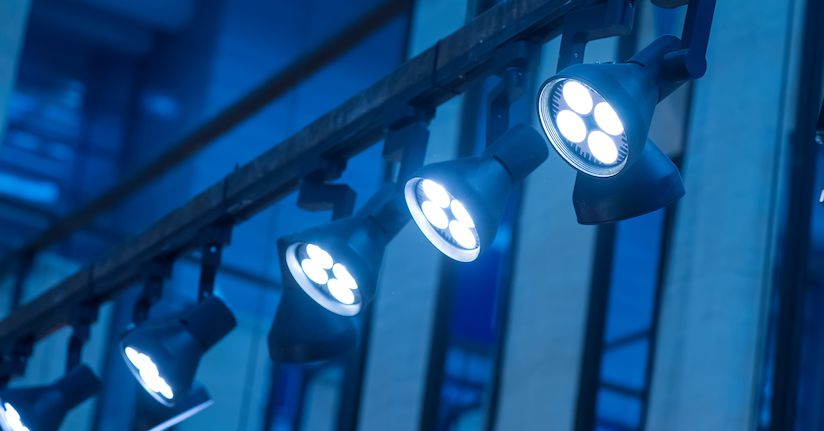
Type and Color of LED Lighting Matters
With new technology often comes new features. This is especially true in the development of organic light emitting diodes (OLED) found within many newer devices. Instead of using a backlight, each pixel in an OLED screen produces their own light. And this may change how our brains interpret that light; a small study showed a reduction in the number of “headache days” and corresponding emotional symptoms for migraine patients in environments with this type of lighting versus standard LEDs.10 As a result, this may also reduce the frequency of episodes of light sensitivity and photophobia.
Even so, it remains unclear if the functioning of OLEDs are actually better for users, especially those who are light sensitive; evidence suggests they may emit as much blue light as other LED options, and its lower frequency flicker may be even more problematic for aggravating headaches and other symptoms.11
The color of light also matters. As discussed, blue light remains a central component of LEDs and continues to be a primary culprit for worsening migraine attacks and sensitivity to light. In addition, red- and white-colored LED lighting also activate areas of the brain that are suspected of producing photophobic and migraine pain. White LEDs with a higher concentration of blue light between 415-455nm have also been shown to decrease contrast sensitivity, which can affect the quality of vision and/or lead to blurriness or susceptibility to glare.12
Curiously, green lighting may be the least likely to instigate migraine attacks, but more investigation is needed to determine if any practical applications exist for patients.5 And remember: the color that you see does not necessarily reflect the amount of blue wavelengths you absorb; in fact, cold, white LEDs have the highest concentration of blue light even though they do not directly appear as blue to the eye.
How to Improve LED-Related Light Sensitivity
While it is highly unlikely for anybody to completely rid himself or herself of LED-related photophobia, a few simple tips can greatly improve any negative effects they may have:
- Avoid artificially dimming any LED or LED-lit LCD screens; instead use color filtering programs like f.lux and other helpful smartphone features.
- Wear specialty-tinted eyewear that filters the harmful wavelengths and flicker that can trigger migraine and light sensitivity.
- Manage the effects of LED glare while driving and/or try nighttime driving glasses, along with other tips here.
- Avoid excessively using LED-lit devices in the evening hours and in darkened environments because of the high-contrast light sensitivity it can produce.
- Experiment with different types of lighting, including organic LED, warm lamp lighting and other options; pay close attention to how you specifically feel in these environments and go with what works better for you.
Hopefully these tips help you better manage the pain and discomfort associated with LED lights in your daily environments.
References:
1Main A, Vlachonikolis I, Dowson A. The wavelength of light causing photophobia in migraine and tension-type headache between attacks. Headache. 2000 Mar;40(3):194-9.
2Kim DJ, Lim C-Y, Gu N, Park CY. Visual Fatigue Induced by Viewing a Tablet Computer with a High-resolution Display. Korean Journal of Ophthalmology : KJO. 2017;31(5):388-393. doi:10.3341/kjo.2016.0095.
3Lindén J, Hemphälä H, Markenroth Bloch K, et al. Temporal light modulation activation in visual cortex – a 7T fMRI study on healthy subjects. LEUKOS. 2025;21(3):215. doi:10.1080/15502724.2025.2583961
4Antona B, Barrio AR, Gascó A, Pinar A, González-Pérez M, Puell MC. Symptoms associated with reading from a smartphone in conditions of light and dark. Appl Ergon. 2018 Apr;68:12-17. doi: 10.1016/j.apergo.2017.10.014. Epub 2017 Nov 2.
5Noseda R, Bernstein CA, Nir RR, et al. Migraine photophobia originating in cone-driven retinal pathways. Brain. 2016;139(Pt 7):1971–1986. doi:10.1093/brain/aww119
6Salvaia J, Elias J, Shepherd AJ. Symptoms of visual discomfort from automobile lights and their correlation with headache in night-time taxi drivers. Lighting Research & Technology. 46(3):354–363.
7Tashiro T, Kawanobe S, Kimura-Minoda T, Kohko S, Ishikawa T, & Ayama M. Discomfort glare for white LED light sources with different spatial arrangements. Lighting Research & Technology. 2015;47(3):316–337.
8Mansur A, Hauer TM, Hussain MW, et al. A Nonliquid Crystal Display Screen Computer for Treatment of Photosensitivity and Computer Screen Intolerance in Post-Concussion Syndrome. J Neurotrauma. 2018;35(16):1886–1894. doi:10.1089/neu.2017.5539
9Hawes B, Brunyé T, Mahoney C, Sullivan J, Aall C. Effects of four workplace lighting technologies on perception, cognition and affective state. International Journal of Industrial Ergonomics. 2012; 42: 122-128.
10Tatsumoto M, et al. Evaluation of the effects of an organic light emitting diode lighting environment for patients with migraine. Journal of the Neurological Sciences. 2017;381:946.
11Wolffsohn JS, Lingham G, Downie LE, et al. TFOS Lifestyle: Impact of the digital environment on the ocular surface. Ocul Surf. 2023;28:213-252. doi:10.1016/j.jtos.2023.04.004
12Monterio D, Kumar EOAM, Ghosh M, et al. Impact of LED exposure on contrast sensitivity and protective efficacy of blue-blocking lenses. Int J Ophthalmol. 2025;18(10):1944-1948. Published 2025 Oct 18. doi:10.18240/ijo.2025.10.18

Last updated 27th Jan 2026
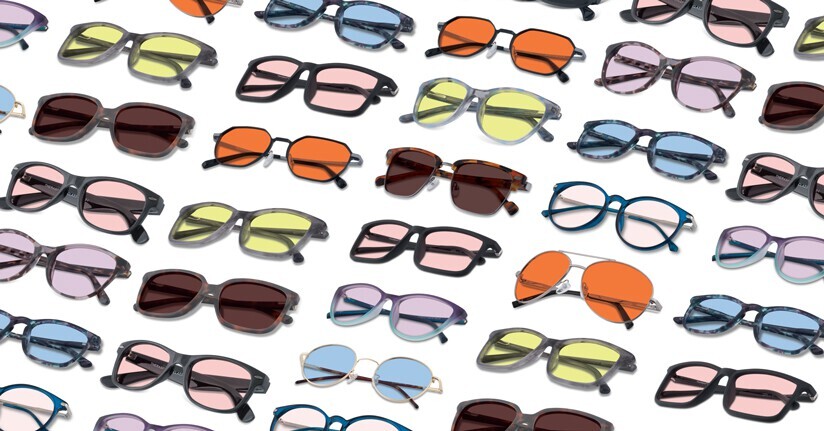
TheraSpecs® Glasses for Light Sensitivity
Find the glasses that fit your needs and lifestyle, and stay protected from screens, fluorescents, unwanted blue light, sunlight, flashing lights, and more.
Shop Now